
Inflammatory Bowel Disease: Everything You Need to Know About Crohn’s Disease and Ulcerative Colitis
- Health Communicator

- Jun 22
- 5 min read
Updated: Jul 10
Inflammatory Bowel Disease (IBD) encompasses two major chronic conditions—Crohn’s disease and ulcerative colitis. These are autoimmune, multisystem disorders that primarily affect the digestive system, but they often impact other organs as well. Crohn’s disease can affect any part of the gastrointestinal (GI) tract—from the mouth to the anus—and is characterized by “skip lesions” (segmental inflammatory activity) and involvement of all layers of the intestinal wall. In contrast, ulcerative colitis mainly affects the colon and rectum, with continuous inflammation limited primarily to the mucosal (inner) layer. These conditions are becoming increasingly common: as of 2024, more than 4.9 million people globally are living with IBD, and over 2.39 million of them are in the United States. Although these diseases often begin in young adulthood, they can occur at any stage of life.
Causes and Risk Factors Genetics and Immune System IBD occurs in people with a hereditary predisposition who develop abnormal immune responses to normal gut microbes. Over 160 genes have been linked to IBD—most notably NOD2/CARD15, particularly in Crohn’s disease. Genetic studies using organoids (mini-guts) have revealed altered gene expression related to stem cells and the mucosal barrier in Crohn’s.


Environment and Lifestyle
Smoking: Increases the risk and worsens the course of Crohn’s disease but paradoxically lowers the risk of ulcerative colitis.
Periodontitis: Gum disease increases the risk of ulcerative colitis, particularly in male smokers, but not Crohn’s.
Diet: Magnesium and other micronutrient deficiencies are more common in Crohn’s patients.
Microbiome: Altered gut bacteria (dysbiosis) is a hallmark, with the disrupted microbiota triggering inflammatory cells and damaging intestinal tissue.
Age and Ethnicity: Most common in people aged 20–40, though 10–15% of cases occur in individuals over 60. The majority of patients in the U.S. are white Americans.
Other Contributing Factors Use of antibiotics, high stress levels, and urban living are considered additional risk factors. Infections (e.g., Salmonella, Campylobacter) are associated with an increased risk of ulcerative colitis.
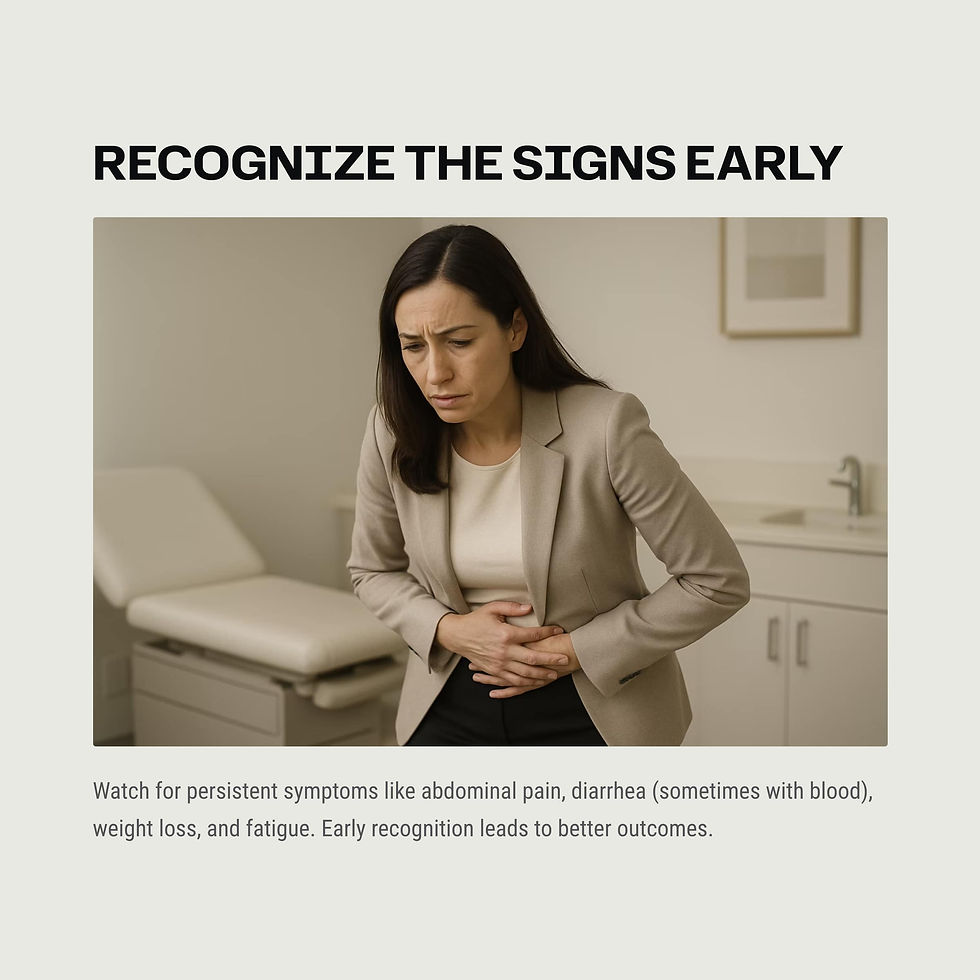
Key Symptoms Crohn’s Disease
Abdominal pain and cramping
Diarrhea (sometimes bloody)
Weight loss, malnutrition
Fatigue
Perianal complications: fistulas, abscesses
Extraintestinal manifestations: involvement of eyes, joints, skin
Ulcerative Colitis
Bloody diarrhea
Abdominal pain and cramping
Urgency and tenesmus (sensation of incomplete bowel movement)
Weight loss, fatigue
Extraintestinal manifestations (less frequent than in Crohn’s)
Extraintestinal Manifestations Around 4–12% of patients experience eye involvement (episcleritis, uveitis), and joint, skin, and liver complications are also possible.
Diagnosis (Expert Insights) Diagnosing IBD requires a combination of clinical assessment, lab tests, imaging, and endoscopy with biopsy.
Clinical Evaluation: Starts with a detailed interview and physical examination.
Lab Markers: Include C-reactive protein (CRP), erythrocyte sedimentation rate (ESR), though these are nonspecific.
Endoscopy: Colonoscopy with biopsy is the “gold standard.” Ulcerative colitis shows continuous inflammation from the rectum upward; Crohn’s presents with skip lesions and deep ulcers.
Fecal Calprotectin: A specialized marker for intestinal inflammation; levels <50 μg/g virtually rule out Crohn’s flare, while higher values help differentiate IBD from irritable bowel syndrome.
Imaging: MRI or CT enterography is essential for evaluating the small intestine, especially in Crohn’s disease.
Perineal Assessment: Routine screening for perianal complications is recommended but often overlooked in practice.
Expert Opinion: Leading gastroenterologists stress that “diagnosis requires a combination of symptoms, objective imaging and lab findings, and histology.”
Treatment and Guidelines (Official Recommendations) Medication Therapy
Mild to Moderate Disease:
Ulcerative colitis: 5-ASA medications (mesalamine)
Crohn’s disease: Budesonide or corticosteroids
Moderate to Severe Disease:
Corticosteroids for induction
Immunosuppressants (azathioprine, 6-mercaptopurine) for steroid-dependent patients
Biologic Therapies:
Anti-TNF agents (infliximab, adalimumab)
Anti-IL-23 (risankizumab, ustekinumab)
S1P modulators (ozanimod, etrasimod) for resistant or complicated cases
Small Molecules:
Janus kinase (JAK) inhibitors like tofacitinib and upadacitinib offer new options in severe cases
AGA Guidelines 2024 (American Gastroenterological Association):
JAK inhibitors are not recommended as first-line treatment for ulcerative colitis.
In biologic-naïve patients, infliximab, ozanimod, risankizumab, and guselkumab are considered most effective.
Diet and Nutrition
Mediterranean Diet: Recommended for all patients—rich in fruits, vegetables, complex carbohydrates, monounsaturated fats; limit ultra-processed foods.
Exclusive Enteral Nutrition: Highly effective in children with Crohn’s; moderate benefit in adults.
Modified Texture: For strictures, food should be pureed or soft in texture.
Surgery
Recommended in cases of complications or failed medication therapy (strictures, fistulas, dysplasia). Biologic therapy reduces the risk of post-operative recurrence, with adalimumab, infliximab, vedolizumab, and ustekinumab proving more effective than standard treatment.
Recent Scientific Discoveries and Cutting-Edge Therapies
New Medications:
S1P modulators and IL-23 inhibitors are becoming central to targeted IBD therapy.
Postbiotics—bioactive compounds produced by probiotic bacteria—show promising anti-inflammatory effects.
Precision Medicine and Biomarkers:
The shift toward personalized treatment based on genetic, serological, and microbiome profiles.
Advanced biomarkers like fecal calprotectin allow more accurate disease monitoring.
Stem Cells:
Mesenchymal stromal cells (MSC) are emerging as “next-gen therapy,” showing good safety and effectiveness in restoring the intestinal barrier and modulating the immune system.
Microbiome Research:
Organoid models (mini-guts) offer an innovative way to study disease mechanisms and test new therapies.
Expert Consensus and Best Practices
Treatment Goal: Achieving “deep remission”—elimination of symptoms, normalization of endoscopic and histological findings.
Personalized Approach: Tailoring therapy based on disease activity, location, complication risk, and patient preferences.
Multidisciplinary Team: Involving gastroenterologists, surgeons, dietitians, specialized nurses, and psychologists.
Real-World Challenges: Only 22% of specialists regularly use standardized remission scoring tools, and 70% do not consistently monitor biomarkers.
Conclusion Inflammatory bowel diseases are chronic, heterogeneous, and often socially stigmatized conditions requiring a complex and individualized approach. Over the past five years, advances in biologic and targeted therapies, along with progress in microbiome science and personalized medicine, have improved patient outcomes. However, challenges remain—such as inconsistent application of treatment standards, lack of a one-size-fits-all solution, and the ongoing need for education.
Key Sources and DOI References
Gastroenterology, 2024 – https://linkinghub.elsevier.com/retrieve/pii/S0016508523052551
Journal of Crohn’s and Colitis, 2024 – https://academic.oup.com/ecco-jcc/article/18/Supplement_1/i1188/7586701
Int J Mol Sci, 2023 – https://www.mdpi.com/1422-0067/26/1/121
CDC, 2023 – http://www.cdc.gov/mmwr/volumes/70/wr/mm7019a2.htm?s_cid=mm7019a2_w
J Clin Med, 2024 – https://www.mdpi.com/2077-0383/13/23/7168
MDPI, 2024 – https://www.mdpi.com/2036-7422/15/3/59
J Periodont Res, 2024 – https://onlinelibrary.wiley.com/doi/10.1111/jre.13291
Nutrients, 2024 – https://www.mdpi.com/2072-6643/16/11/1662
Biomedicines, 2024 – https://www.mdpi.com/2227-9059/12/12/2856
Calprotectin guidelines, 2024 – https://academic.oup.com/crohnscolitis360/article/doi/10.1093/crocol/otae016/7625031
Gastroenterology, 2024 – https://linkinghub.elsevier.com/retrieve/pii/S0016508523047765
AGA guidelines, 2024 – https://linkinghub.elsevier.com/retrieve/pii/S0016508524054805
ECCO-JCC, 2024 – https://academic.oup.com/ecco-jcc/article/18/Supplement_1/i2165/7587031
Springer, 2024 – https://link.springer.com/10.1007/s00535-024-02130-x
AGA clinical practice, 2024 – https://linkinghub.elsevier.com/retrieve/pii/S001650852305597X
AGA Nutrition, 2024 – https://www.mdpi.com/2072-6643/16/11/1662
ECCO-JCC meta-analysis, 2024 – https://academic.oup.com/ecco-jcc/article/18/Supplement_1/i102/7586179
Expert Rev Clin Immunol, 2024 – https://www.tandfonline.com/doi/full/10.1080/14712598.2024.2383882
Front Immunol, 2024 – https://www.frontiersin.org/articles/10.3389/fimmu.2024.1462158/full
IBD Research Update, 2024 – https://academic.oup.com/ibdjournal/article/30/Supplement_2/S39/7676454
J Inflamm Res, 2024 – https://www.dovepress.com/mesenchymal-stromal-cells-new-generation-treatment-of-inflammatory-bow-peer-reviewed-fulltext-article-JIR
BMJ Open Gastro, 2024 – https://bmjopengastro.bmj.com/lookup/doi/10.1136/bmjgast-2023-001225
BMJ Open Gastro, 2024 – https://bmjopengastro.bmj.com/lookup/doi/10.1136/bmjgast-2024-001541
ECCO-JCC, 2024 – https://academic.oup.com/ecco-jcc/article/18/Supplement_1/i681/7586111
Crohn’s & Colitis 360, 2024 – https://academic.oup.com/crohnscolitis360/article/doi/10.1093/crocol/otae055/7816903


Comments