
Irritable Bowel Syndrome: Scientific Answers and Practical Guidelines for a Better Life
- Health Communicator

- Jun 22
- 5 min read
Updated: Jul 10
The information in this article has been carefully selected and summarized based on the most up-to-date scientific publication, "Causative Factors, Clinical Manifestations, and Therapeutic Strategies for Irritable Bowel Syndrome" (Cureus, 2024), by Khushi Anand and Mahalaqua Nazli Khatib—researchers and practicing physicians from Jawaharlal Nehru Medical College at the Datta Meghe Institute of Higher Education and Research (India). Dr. Anand and Dr. Khatib are experts in internal medicine, epidemiology, and public health. In their comprehensive review, they deeply examine the causes, symptoms, diagnostic criteria, and treatment strategies for Irritable Bowel Syndrome (IBS), with a focus on evidence-based approaches, the individualized nature of the condition, and current trends in management. The following questions and answers have been selected to provide the most practical and relevant information for patients and their families, based entirely on the cited publication.
“Irritable Bowel Syndrome requires an individualized and holistic approach—understanding its symptoms and triggers is truly the first step toward control and a better quality of life.”


Expert Insights
Irritable Bowel Syndrome (IBS) is a chronic functional disorder of the gastrointestinal tract, characterized by abdominal discomfort, pain, and changes in bowel movements. The condition has a complex pathophysiology involving both biological and psychosocial factors, and treatment is often multi-faceted and tailored to the individual. Patients and their families frequently feel confused or anxious about the diagnosis, its causes, and the available treatment options. Below are five expert insights and scientific quotes that highlight key aspects of the condition, intended specifically for patients and their loved ones.
1. What are the causes and mechanisms behind IBS?
Expert Opinion: “IBS is a chronic condition that significantly reduces the quality of life for those affected. The causes are complex—ranging from disruptions in the brain-gut axis, immune and microbiome-related factors, genetic predisposition, to psychosocial influences such as stress, anxiety, and depression… Diagnosis is symptom-based, and the underlying pathophysiology is highly multifaceted and individualized for each patient.” (“The etiology of IBS remains incompletely comprehended and appears complex. Numerous pathogenetic variables can be significant, even if they are not always present in every case and might combine in different ways...”)
2. How is IBS diagnosed, and why is early and accurate diagnosis important?
Expert Opinion: “The current gold standard for diagnosing IBS is the Rome IV Criteria, which provide a standardized framework for identifying and classifying the disorder... In most cases, diagnosis is based on clinical history and a limited number of tests, unless there are alarming symptoms (such as weight loss, rectal bleeding, or a family history of celiac disease or inflammatory bowel disease)...” (“The present gold customary for IBS diagnosis is the Rome Criteria IV. The Rome IV Criteria is a diagnostic guideline for classifying functional gastrointestinal disorders, including IBS. It provides a standardized framework for healthcare professionals to identify and diagnose these conditions based on specific symptom criteria, such as abdominal pain and changes in bowel habits.”)
3. How important is the connection between mental and physical health in IBS?
Expert Opinion: “Anxiety, depression, and stress are frequently seen in patients with IBS, worsening symptoms and complicating treatment. The link between IBS and psychosocial factors highlights the need for a comprehensive approach. People with such comorbidities often experience more intense symptoms, and the integration of psychotherapeutic interventions has been shown to improve quality of life.” (“Anxiety, depression, and stress are frequently observed alongside IBS, exacerbating symptoms and complicating its management. The association between IBS and psychosocial factors underscores the need to understand the condition's pathogenesis comprehensively.”)
4. What are the current and promising treatment approaches for IBS?
Expert Opinion: “The foundations of treatment include patient education, dietary changes, soluble fiber, and antispasmodics. Additional medications and psychotherapy are used for more severe cases. In recent years, innovative medications and digital therapies have been developed, offering hope for better symptom control.” (“Soluble fiber, antispasmodic medications, dietary modifications, and patient education on the illness are the cornerstones of treatment. Additional medicines, such as intestinal secretagogues, minimally absorbed antibiotics... central neuromodulators, medications acting on opioid or 5-HT receptors, and psychiatric therapies, are often saved for patients with more severe symptoms. Over the past ten years, a robust pipeline of innovative medications has been under development due to an increased understanding of the pathophysiology of IBS.”)
5. What is the role of diet and the microbiome, and is there scientific evidence supporting diets like low-FODMAP?
Expert Opinion: “Diet has been shown to significantly affect IBS symptoms. The strongest evidence for symptom control is found with the low-FODMAP diet, as well as with individualized meal plans tailored to a patient’s specific symptoms and responses. Modifying the gut microbiota with probiotics, prebiotics, and synbiotics is also being actively studied.” (“The low fermentable, oligo-, di-mono-saccharide, and polyol diet offers the most substantial evidence for effectiveness in managing symptoms, despite the wide range of therapies offered to people with IBS.”)
Frequently Asked Questions
1. Are there different types of IBS, and why is it important to know which type I have?
Answer: Yes, IBS is mainly divided into three subtypes:
IBS with predominant constipation
IBS with predominant diarrhea
IBS with mixed symptoms (alternating constipation and diarrhea)
Each type requires a different treatment approach—for example, patients with diarrhea-predominant IBS may need different medications and dietary plans than those with constipation. Knowing your subtype helps your doctor choose the most effective treatment tailored to your individual needs.
2. How common is IBS, and does it affect certain groups more than others?
Answer: IBS is one of the most common gastrointestinal disorders, affecting between 5% and 10% of the population at any given time. It’s most commonly seen in young women, but it can affect people of all ages and genders. It is also frequently associated with other functional disorders, such as fibromyalgia or functional dyspepsia.
3. Is there a risk that more serious conditions can be mistaken for IBS?
Answer: Yes. Although IBS is a functional disorder, it’s important to rule out more serious diseases that can mimic its symptoms—such as celiac disease, inflammatory bowel disease, or colorectal cancer. This is why symptoms like unexpected weight loss, rectal bleeding, or a family history of cancer or inflammatory diseases require further testing and careful diagnosis.
4. Does food directly affect IBS symptoms, and are there “good” and “bad” foods?
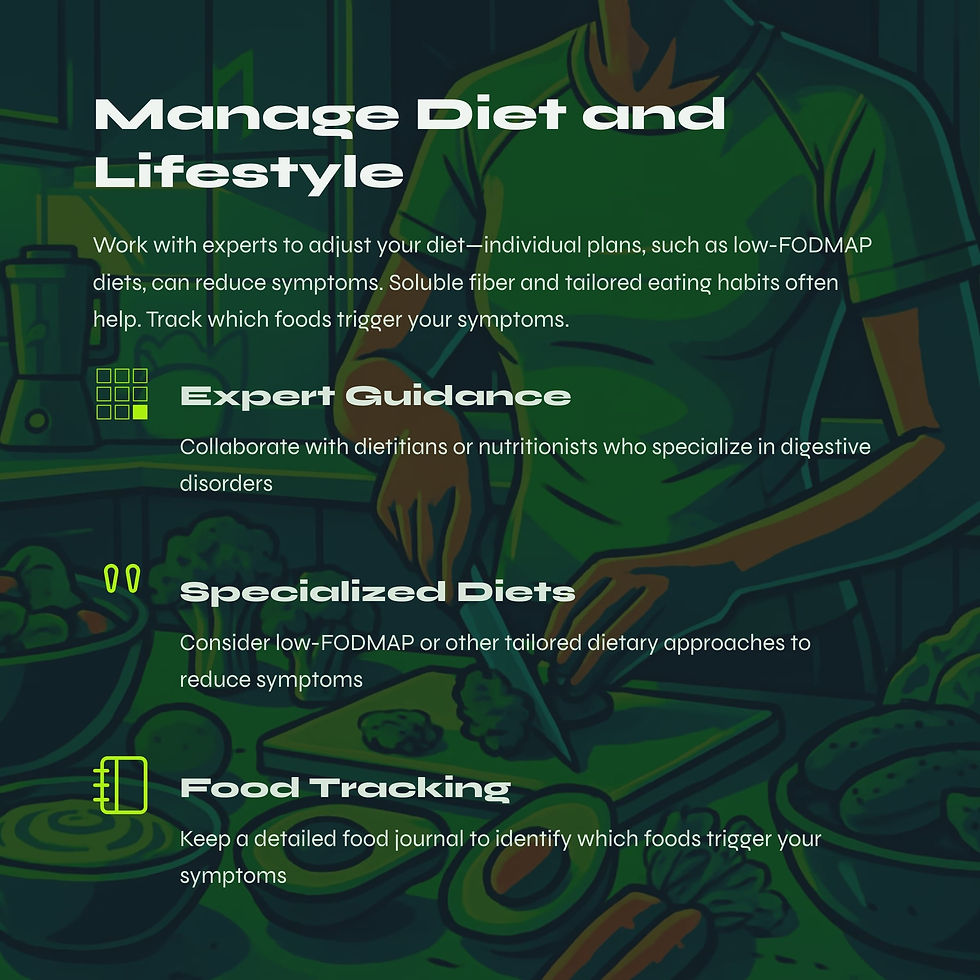
Answer: Food is often a trigger for IBS symptoms. Patients frequently report worsened symptoms after consuming certain foods—such as those high in fiber, lactose, FODMAPs (like onions, garlic, wheat), spicy or fatty meals, caffeine, alcohol, and carbonated drinks. The article emphasizes the importance of an individualized approach. There is no universal list of “forbidden” or “safe” foods—personalized dietary consultations are necessary to identify your own specific triggers.
5. Does stress really make IBS worse, and how can I manage it?
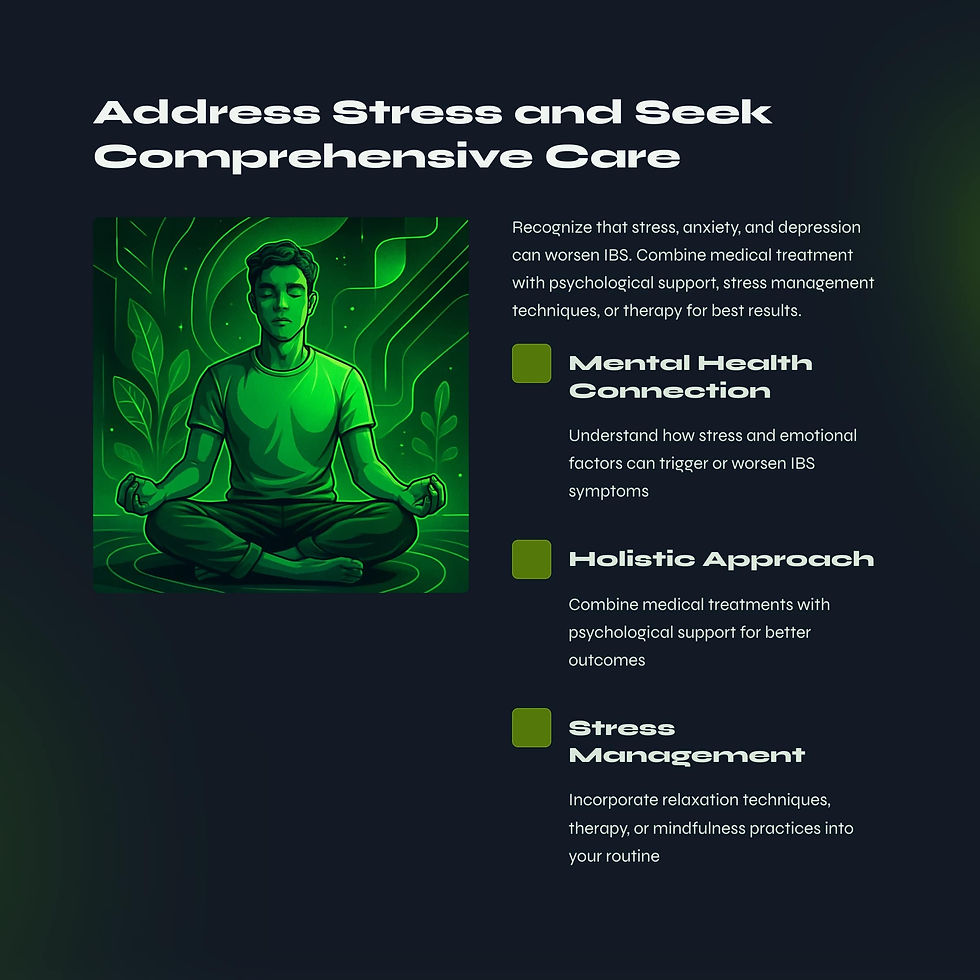
Answer: Absolutely. Stress has a proven effect on IBS symptoms, as the brain-gut axis regulates both bowel movements and sensitivity to pain. The article points out that stress impacts the central nervous system, the microbiome, and the gut’s immune function. That’s why stress management is an essential part of treatment—whether through psychotherapy, cognitive behavioral therapy, relaxation techniques, or other methods depending on your preferences and available resources.
Conclusion
Irritable Bowel Syndrome remains one of the most common and socially impactful digestive disorders, with a complex pathophysiology and diverse clinical presentation. As shown in the analysis by Anand and Khatib, effective management of the condition requires a comprehensive, individualized approach that includes accurate diagnosis, appropriate lifestyle and dietary changes, stress management, and—when necessary—pharmacological and psychological support. It’s important for patients to be well-informed, to understand the types and symptoms of IBS, potential triggers and risks, and to have access to the latest information on current treatment approaches. Only then can they fully participate in managing their own health and achieve a better quality of life.
Source Anand K, Khatib M. (2024) Causative Factors, Clinical Manifestations, and Therapeutic Strategies for Irritable Bowel Syndrome. Cureus 16(4): e58728. DOI: 10.7759/cureus.58728


Comments