
Precision Medicine in Inflammatory Bowel Disease: A New Era of Personalized Care
- Health Communicator

- Jun 22
- 6 min read
Updated: Jul 10
This article is based entirely on the most recent publication “Challenges in IBD Research 2024: Precision Medicine,” published in the prestigious journal Inflammatory Bowel Diseases in 2024. The authors are a multidisciplinary team of leading international researchers, clinicians, and patient organization representatives, including pediatricians, gastroenterologists, biologists, medical technology experts, and patient-experts from universities and research institutions across the United States, Canada, the United Kingdom, Portugal, and more.
Here, the most important findings from this large-scale publication have been selected and summarized to highlight the most relevant points for patients with inflammatory bowel disease (IBD), including Crohn’s disease and ulcerative colitis, and their families. The goal is to present the latest scientific information about personalized medicine, diagnostics, treatment choices, and patient participation in a way that is accessible and easy to understand—so that anyone can make more informed decisions about their health.
"The future of IBD treatment is personal, science-based, and inspired by patients’ needs."



What the Experts Say
Precision medicine, particularly in the context of inflammatory bowel diseases like Crohn’s disease and ulcerative colitis, is becoming an increasingly important topic for patients, caregivers, and healthcare professionals alike. It’s an approach aimed at providing the most appropriate treatment for each individual based on the unique characteristics of their disease—ranging from genetic factors to clinical and molecular indicators (biomarkers). Below are five key expert insights and conclusions from the latest scientific analyses to help patients and their families better understand the current opportunities and challenges in precision medicine for IBD.
1. Why are new and better biomarkers needed for early diagnosis and disease prediction?
“To enable precision interception of disease, we must both understand how presymptomatic molecular alterations can predict a variety of disease attributes and identify thoroughly validated biomarkers that map the entire disease journey. As such, there is a great need to bring newly discovered and yet-to-be-discovered biomarkers into the clinic where they can directly impact patient lives.”
Explanation: This means that if we can detect certain molecular changes (for example, in blood or tissues) before symptoms even appear, we can direct patients toward monitoring, prevention, or early treatment much sooner.
2. What are the current and needed biomarkers for tracking remission?
“The current landscape in IBD biomarkers is anchored by 2 approved indicators of inflammation, CRP and fecal calprotectin. While effective in distinguishing active disease from remission, their correlations with remission fall short of negating the necessity for endoscopy. ... The critical need arises for better noninvasive biomarkers, ones that not only guide therapeutic decision making, but also catalyze advancements in research.”
Explanation: Despite advancements, we still rely heavily on endoscopy to confirm remission. There’s a strong need for better noninvasive tests that would help both patients and clinicians monitor disease more easily.
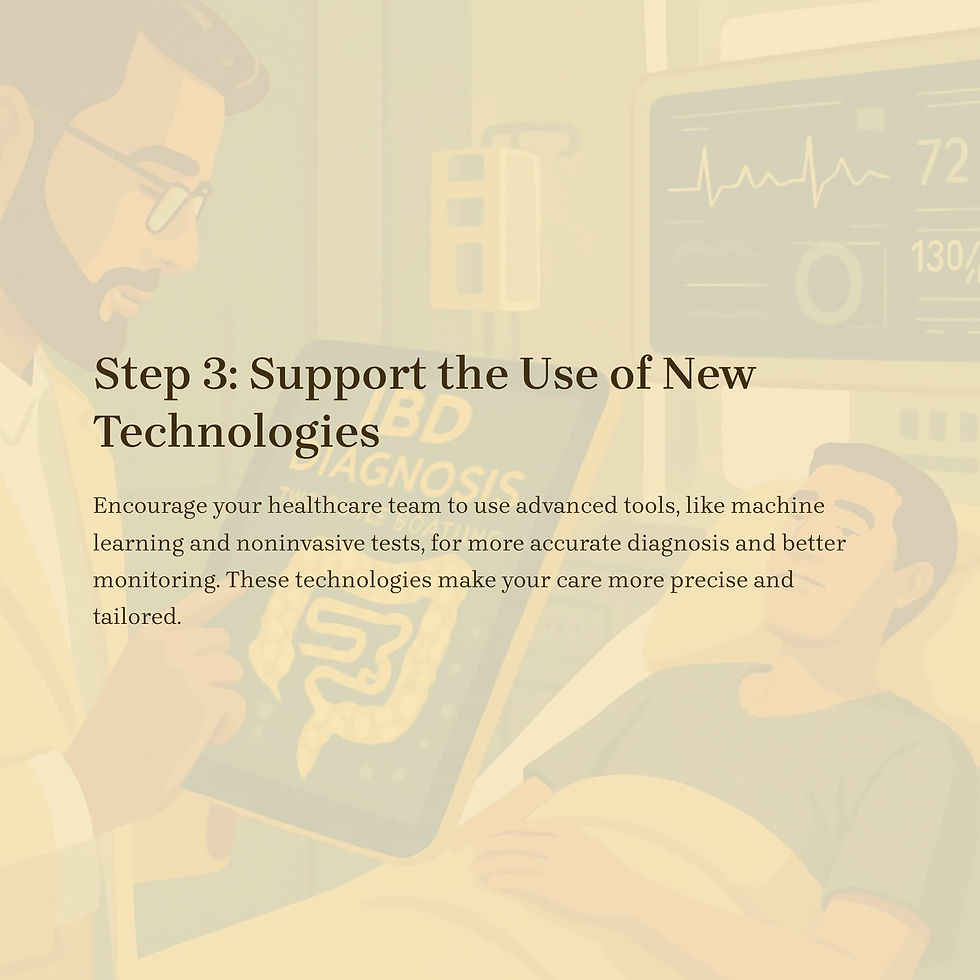
3. Can machine learning and new technologies transform IBD diagnostics and monitoring?
“Machine learning has been another area of exponential growth in IBD research over the last 5 years. ... These techniques are particularly well suited to identify patterns and extract features from images that are pertinent for disease classification. ... As the quality of machine learning is heavily dependent on the robustness of data that the models are trained on, it is critical that future machine learning tools are trained on sufficiently large and unbiased datasets that accurately reflect the heterogeneity of patient characteristics.”
Explanation: This is a crucial development for the future—artificial intelligence could make diagnostics faster, more accurate, and more personalized, as long as it’s trained on large, high-quality, and diverse datasets.
4. What are the biggest unresolved issues in implementing precision medicine for IBD?
“Despite dozens of biomarker candidates, fecal calprotectin and CRP are currently the only biomarkers that have received FDA approval for their use in diagnosing IBD. This represents a major gap in reducing the burden of disease and addressing patients’ unmet needs. ... The validation process must be standardized and accessible to all researchers conducting biomarker studies through validation cohorts.”
Explanation: There are many promising discoveries, but very few reach clinical practice due to a lack of standardized protocols and sufficiently large validation studies.
5. What can patients expect in the coming years?
“There is real hope that the application of new and existing datasets with evolving analytic tools in large, well-characterized cohorts will result in discovering and validating biomarkers to unmet patient needs.”
Explanation: Advances in genetics, proteomics, AI-based analysis, and biobanking provide strong reasons for optimism—in the coming years, new biomarkers may help provide more accurate diagnoses, better treatment choices, and individualized disease monitoring.
Q&A Section
1. Is there a way to know in advance if I’m at risk for developing IBD, especially if I have a family history?
Answer: The article highlights that in recent years, lab indicators (biomarkers) have been identified that can appear 5–10 years before any clinical symptoms. Programs like PREDICTS, GEM, and the Danish Register of Laboratory Results are exploring the presence of these biomarkers in healthy but at-risk individuals (e.g., relatives of IBD patients). This means that if you have a close relative with IBD, you may be able to benefit in the future from preventive testing that could detect risk early and allow for proactive monitoring or intervention.
2. Can I receive personalized treatment based on the specifics of my condition rather than following the standard treatment protocol?
Answer: One of the main goals of precision medicine is to ensure that each patient receives the most appropriate treatment based on their genetic profile, molecular indicators, and disease behavior. While not all of these options are currently available in routine clinical care, the scientific community is working toward this by discovering and validating new biomarkers that will enable a more personalized approach. In the future, this will mean fewer “trial-and-error” treatment attempts and a faster path to the most effective therapy for each individual.
3. What’s holding back new IBD tests from becoming part of standard diagnostics and monitoring?
Answer: Despite hundreds of new biomarkers discovered in labs, only two—CRP and fecal calprotectin—were FDA-approved for clinical use as of 2023. The main obstacles are the lack of large, standardized validation studies, inconsistent testing protocols, and regulatory and financial barriers. These challenges delay the adoption of better tests that could significantly improve the lives of patients.
4. Can artificial intelligence or new technologies help my doctor monitor my condition better?
Answer: Absolutely. The article highlights emerging methods like machine learning and single-cell RNA sequencing that allow scientists and clinicians to monitor IBD at an extremely detailed level. For example, specialized programs can automatically interpret endoscopy or biopsy images to predict relapse risk or complications—sometimes even before clinical symptoms appear. In the future, this will help both doctors and patients make decisions based on much more precise and individualized data than ever before.
5. What new guidance exists for patients regarding participation in research and biobanking?
Answer: The article emphasizes the need for broader collection and sharing of biological samples and clinical data. New biobanks and programs like IBD Plexus collect samples (blood, tissues, data on symptoms and treatments) from thousands of patients to study new biomarkers. Choosing to participate helps not only scientific research but also future patients—including yourself—by speeding up the development of new diagnostic and therapeutic tools. The article also highlights the importance of clear consent for using samples in various studies to accelerate scientific breakthroughs in the field.
Conclusion
Precision medicine in inflammatory bowel disease is a rapidly evolving field that promises to significantly improve diagnosis, treatment, and patient quality of life. As emphasized in the publication by Syed and colleagues (Challenges in IBD Research 2024: Precision Medicine), the future of IBD care will be shaped by the discovery and clinical application of more reliable biomarkers, the expanded use of advanced technologies, and the integration of patients' voices and needs into scientific research. While challenges remain—from the lack of validated biomarkers to organizational and regulatory hurdles—the progress in recent years is substantial and gives real hope for a future of personalized care that truly meets the needs of each IBD patient.
Source: Syed S., Boland B. S., Bourke L. T., Chen L. A., Churchill L., Dobes A., Greene A., Heller C., Jayson C., Kostiuk B., Moss A., Najdawi F., Plung L., Rioux J. D., Rosen M. J., Torres J., Zulqarnain F., Satsangi J., et al. (2024). Challenges in IBD Research 2024: Precision Medicine. Inflammatory Bowel Diseases, 30(Supplement 2), S39–S54. https://doi.org/10.1093/ibd/izae084


Comments