
High Blood Pressure and Chronic Kidney Disease: What Every Patient Needs to Know According to the Latest Global Guidelines
- Health Communicator

- Jun 22
- 5 min read
Updated: Jul 14
This article is based on the most up-to-date and internationally recognized guideline for managing blood pressure in chronic kidney disease – the KDIGO 2021 Clinical Practice Guideline for the Management of Blood Pressure in Chronic Kidney Disease (Kidney International, 2021, 99, S1–S87). The guideline is the result of collaboration among leading global experts—nephrologists, clinical researchers, and practicing physicians—organized under the international body Kidney Disease: Improving Global Outcomes (KDIGO). The project was led by Professor Alfred K. Cheung (University of Utah, USA) and Professor Johannes F. E. Mann (Friedrich Alexander University, Germany), and included specialists from the U.S., Europe, Canada, China, Brazil, and Australia. The publication is grounded in a systematic review of the most recent clinical trials and scientific data up to 2020. It offers practical and reliable recommendations for both the medical community and patients with chronic kidney disease (CKD) and their families.
In the following questions and answers, you’ll find the most important information that may be useful if you’re dealing with CKD and high blood pressure. All answers are directly drawn from the guideline’s recommendations and analyses.
"Accurate blood pressure control is the strongest weapon in the fight for healthy kidneys and a longer life with chronic kidney disease."


Expert Opinions
Blood pressure control is a critical factor for individuals with chronic kidney disease because high blood pressure not only accelerates kidney failure but also increases the risk of cardiovascular complications. The new guideline emphasizes the importance of personalized treatment, modern measurement methods, and holistic care—including lifestyle changes. Below are five key expert opinions and recommendations, with explanations to guide both patients and their families.
1. How should blood pressure be measured in patients with chronic kidney disease?
“We recommend standardized office BP measurement in preference to routine office BP measurement for the management of high BP in adults (1B).”
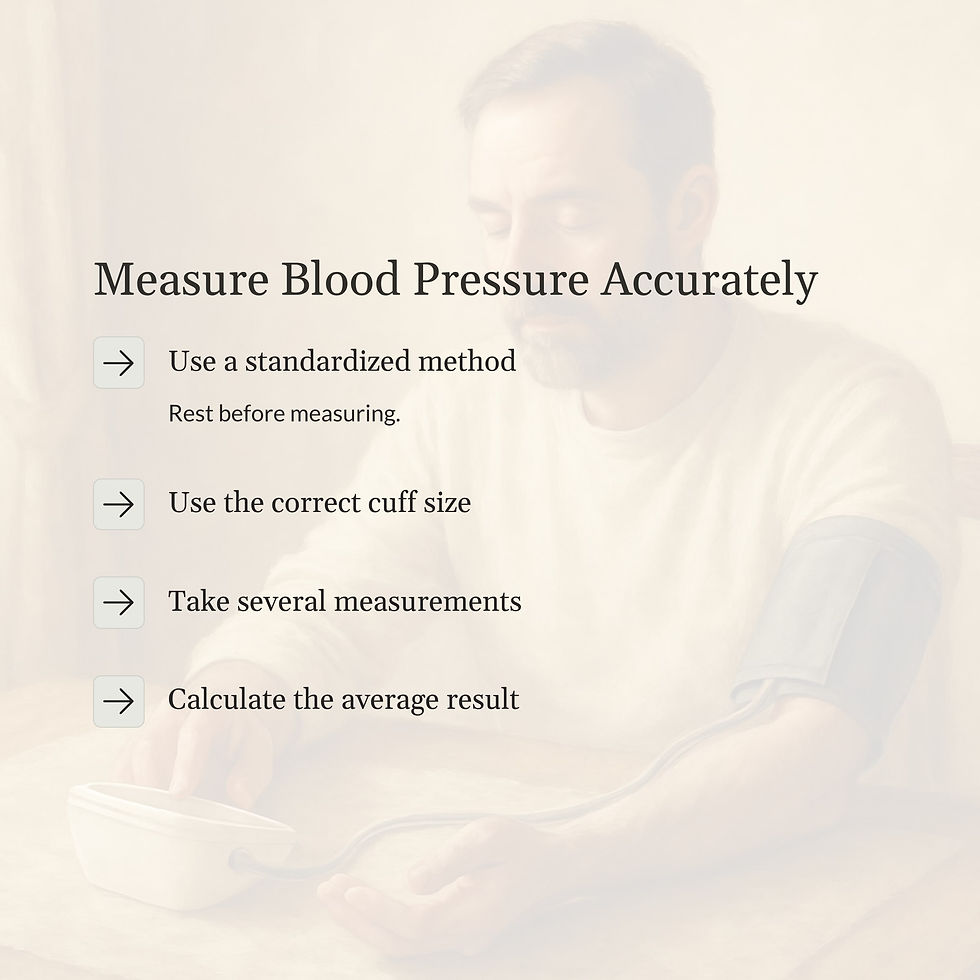
Explanation: Modern scientific research clearly shows that using a precise and consistent measurement method is crucial. This is the only way doctors and patients can compare their results with those from major clinical trials and avoid underestimating or overestimating risk. Standardized measurements follow a specific protocol: rest before measuring, use of the correct cuff size, taking multiple readings, and averaging the results. The type of device (automated or manual) is less important than following the proper technique.
2. What are the optimal blood pressure targets?
“We suggest that adults with high BP and CKD be treated with a target systolic blood pressure (SBP) of <120 mm Hg, when tolerated, using standardized office BP measurement (2B).”
Explanation: This is a more aggressive target than previous standards, based on large studies like SPRINT. Meeting this goal significantly reduces cardiovascular events and risk of death. However, this target should be personalized based on patient tolerance—especially in older adults, those with very low diastolic blood pressure, or those with severe comorbid conditions.
3. What role do medications that block the renin-angiotensin system play?
“We recommend starting renin-angiotensin-system inhibitors (RASi) (angiotensin-converting enzyme inhibitor [ACEi] or angiotensin II receptor blocker [ARB]) for people with high BP, CKD, and severely increased albuminuria (G1–G4, A3) without diabetes (1B).”
Explanation: ACE inhibitors and ARBs are the first-line therapy because they have been shown to slow the progression of kidney disease, particularly when protein is found in the urine. These medications should be used at the highest tolerated dose, with close monitoring of creatinine and potassium—especially during the first 2–4 weeks after starting or increasing the dose. If creatinine rises more than 30% or persistent hyperkalemia develops, the dosage may need to be reconsidered.
4. What role does lifestyle play in blood pressure control?
“We suggest targeting a sodium intake <2 g of sodium per day (or <90 mmol of sodium per day, or <5 g of sodium chloride per day) in patients with high BP and CKD (2C).”
Explanation: A low-sodium diet remains a key non-medication strategy. Reducing salt intake directly affects blood pressure and the progression of kidney disease. Patients should be cautious of hidden sources of salt (processed foods, deli meats, salty snacks). There are specific cases (such as certain inherited nephropathies) where salt restriction is not recommended.
5. What should patients know about risks and the need for an individualized approach?
“Clinicians can reasonably offer less intensive BP-lowering therapy in patients with very limited life expectancy or symptomatic postural hypotension.”
Explanation: An individualized approach is always important. For some patients—especially the elderly, terminally ill, or those who frequently faint when standing—excessive lowering of blood pressure may be more harmful than beneficial. Decisions should be made together with the patient and family, focusing on quality of life, treatment tolerability, and desired outcomes.
Questions and Answers
1. Why is it so important for my blood pressure to be measured a specific way, and not just “as usual” in the doctor’s office?
Answer: The guideline points out that routine (non-standardized) blood pressure measurements in the office are often higher and more variable between individuals than standardized measurements. This means that if your blood pressure is measured incorrectly, you could be overtreated (risking low blood pressure and side effects) or undertreated (risking kidney and heart damage). Only by following all recommended procedures—resting beforehand, proper posture, multiple readings, correct cuff size—can your doctor make the right decision about your treatment.
Source: KDIGO 2021, Summary of recommendation statements and practice points.
2. Should I measure my blood pressure at home or with a 24-hour monitoring device?
Answer: Yes, the guideline recommends home blood pressure monitoring (HBPM) and 24-hour ambulatory monitoring (ABPM) as very useful additions to office measurements. These methods provide a more accurate and complete picture of your blood pressure throughout the day and help your doctor adjust treatment.
Source: “We suggest that out-of-office BP measurements with ambulatory BP monitoring (ABPM) or home BP monitoring (HBPM) be used to complement standardized office BP readings for the management of high BP (2B).” – KDIGO 2021.
3. Are there things I should avoid when measuring my blood pressure to get accurate results?
Answer: Yes. It’s recommended that you avoid caffeine, physical activity, and smoking for at least 30 minutes before measurement. You should be rested, sitting with feet flat on the floor, back supported, and arm supported. Don’t talk during the measurement. It should be done several times, with the average taken as your result. These are all part of the “standardized office measurement” checklist that minimizes error and ensures reliable values for treatment decisions.
Source: Checklist for standardized office blood pressure measurement – KDIGO 2021.
4. Are there situations where a low-sodium diet is not appropriate for me?
Answer: Yes. While sodium restriction is highly recommended for most patients with CKD and high blood pressure, there are specific conditions (such as “sodium-wasting nephropathy”) where this type of diet may not be appropriate. If you have one of these rare diagnoses or have been told you lose too much salt in your urine, you should discuss this with your nephrologist.
Source: “Dietary sodium restriction is usually not appropriate for patients with sodium-wasting nephropathy.” – KDIGO 2021.
5. Are there risks if I take blood pressure medications like ACE inhibitors or ARBs, and what should I watch for?
Answer: Yes, there are potential risks associated with these drugs—especially increases in serum creatinine (a marker of kidney function) and potassium levels. That’s why the guideline recommends monitoring these levels within 2–4 weeks after starting or increasing the dose. If creatinine rises more than 30% or you develop difficult-to-control hyperkalemia, your therapy may need to be adjusted.
Source: “Changes in BP, serum creatinine, and serum potassium should be checked within 2–4 weeks of initiation or increase in the dose of a RASi...” – KDIGO 2021.
Conclusion
These questions and answers reflect the evidence-based recommendations of leading global experts compiled in the KDIGO 2021 guideline. Patients and their families can use this information to be more informed and involved in their care—to ask the right questions, understand the importance of precise blood pressure control, and recognize situations that require an individualized approach. The main goal of both the guideline and this material is to facilitate communication between doctors and patients and to encourage active participation in treatment decisions.
Source KDIGO 2021 Clinical Practice Guideline for the Management of Blood Pressure in Chronic Kidney Disease – Kidney International (2021) 99, S1–S87. https://kdigo.org/guidelines/blood-pressure-in-ckd/


Comments