
Kidney Failure: A Comprehensive and Up-to-Date Overview
- Health Communicator

- Jun 22
- 5 min read
Updated: Jul 14
Kidney Failure: A Comprehensive and Up-to-Date Overview (Based on the latest peer-reviewed research, clinical guidelines, and official sources from 2020–2024)
Brief Overview
Kidney failure—also known as renal failure or end-stage renal disease (ESRD)—is a serious medical condition in which the kidneys lose their ability to filter waste products and excess fluids from the blood. This leads to a buildup of toxins and fluids in the body, which can be life-threatening without treatment. Kidney failure is typically diagnosed when the estimated glomerular filtration rate (eGFR) falls below 15 ml/min/1.73 m². At this advanced stage, supportive treatments such as dialysis or kidney transplantation are required.
Kidney failure is the final outcome of chronic kidney disease (CKD), which often progresses "silently" and goes undetected until the late stages. It is a growing global health concern, especially in the United States, where more than 750,000 people are affected.



Causes and Risk Factors
The causes of kidney failure are complex and usually accumulate over time. The main risk factors, particularly in developed countries, include:
Diabetes: Chronically high blood sugar levels damage the delicate vessels (glomeruli) in the kidneys and represent the most common cause of kidney failure.
Hypertension (high blood pressure): Persistently elevated blood pressure damages and narrows the blood vessels in the kidneys.
Cardiovascular disease: Heart and vascular conditions often coexist with and accelerate kidney damage.
Other medical conditions: These include glomerulonephritis (kidney inflammation), polycystic kidney disease (a genetic condition), and repeated episodes of acute kidney injury (AKI).
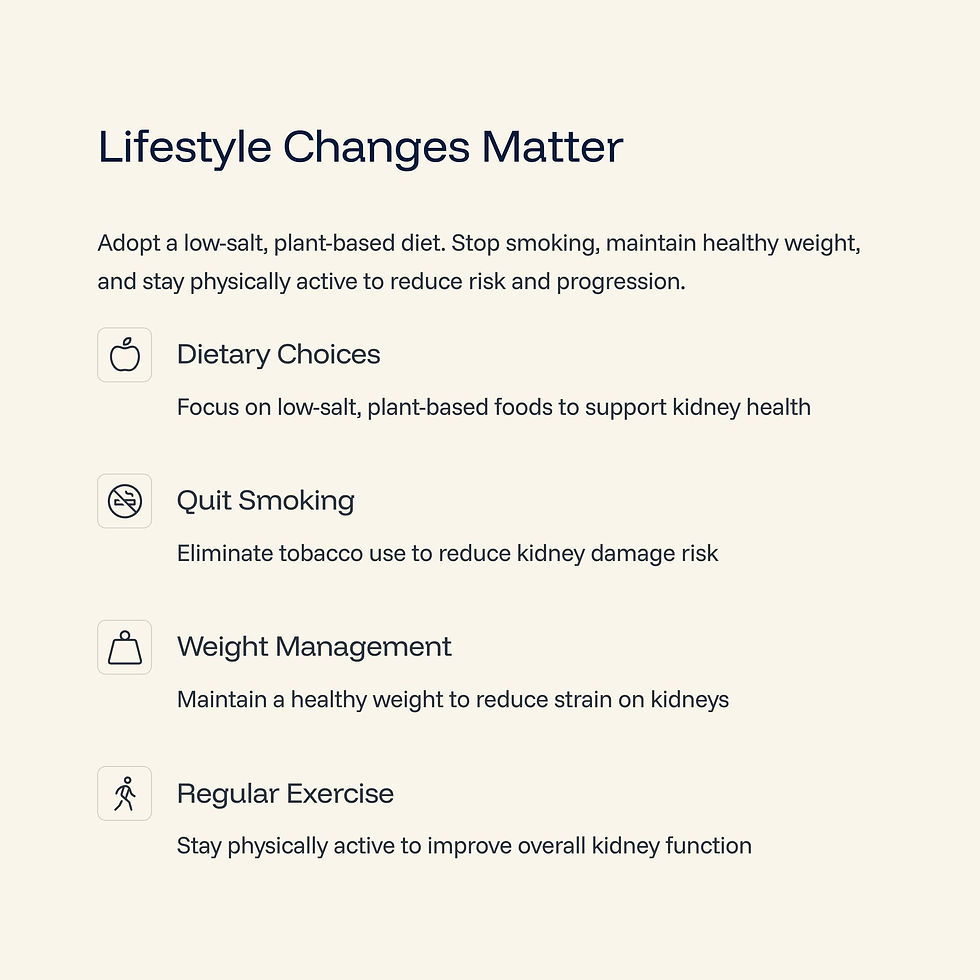
Lifestyle and environmental factors: Obesity, unhealthy diet (especially high in salt and processed foods), lack of physical activity, smoking, and exposure to toxins (heavy metals, pesticides).
Social determinants: Socioeconomic status, limited access to healthcare, and ethnic background significantly impact disease prevalence and progression. In the U.S., African Americans, Latinos, and Indigenous populations face higher risks and more limited access to transplantation.
Age and heredity: Kidney function naturally declines with age, and some people have a genetic predisposition to kidney disease.
Expert Opinion Dr. Csaba Kovesdy, leading nephrologist, notes: "Diabetes and hypertension account for three-quarters of new kidney failure cases in the U.S., but inequities in care access—often due to social and structural barriers—remain a major challenge."
Key Symptoms
Kidney failure often develops without symptoms until the late stages. As the disease progresses, the following may occur:
Fatigue and weakness: Caused by toxin buildup and anemia (low red blood cell count).
Swelling (edema): Especially in the legs, ankles, feet, and around the eyes due to fluid retention.
Changes in urination: Decreased urine output, foamy urine (protein loss), and in advanced stages, little to no urine.
Loss of appetite, nausea, vomiting: Due to the accumulation of waste products (urea and others) in the blood.
Difficulty concentrating, confusion: Metabolic waste affects brain function.
High blood pressure: Both a cause and a complication that often worsens as kidney failure progresses.
Skin itching and muscle cramps: Due to imbalances in electrolytes and toxins.
Note: These symptoms are not unique to kidney failure and can appear in other conditions—hence the importance of routine screening in high-risk groups.
Diagnosis (Expert Insights and Guidelines)
How is kidney failure diagnosed?
eGFR (estimated glomerular filtration rate): The main lab indicator, calculated using blood creatinine levels, age, and other factors. An eGFR below 15 ml/min/1.73 m² confirms kidney failure.
Urine tests: To detect protein (albuminuria), which signals kidney damage and helps predict disease progression.
Imaging: Ultrasound or CT scans to assess kidney size, structure, and any obstructions.
Blood tests: To check for anemia, electrolyte levels (potassium, calcium), and waste products.
Biopsy: Used when the cause is unclear or to diagnose specific kidney conditions.
Expert Consensus Early detection is critically important. New eGFR formulas (without race-based adjustment) and biomarkers like cystatin C are improving diagnostic accuracy and fairness. According to KDIGO and the National Kidney Foundation, routine monitoring of eGFR and urinary protein is essential in high-risk patients.
Treatment and Recommendations (Official Guidelines)
The main goals of treatment are to slow kidney function decline, manage symptoms, prevent complications, and—when failure is advanced—initiate replacement therapy. Leading international and U.S. guidelines recommend:
Blood Pressure Control:
First-line treatment: ACE inhibitors (e.g., ramipril) or angiotensin receptor blockers (ARBs, e.g., losartan) lower blood pressure and reduce urinary protein.
Intensive control: Systolic blood pressure below 120–130 mmHg is recommended for most patients.
Blood Sugar Control (for diabetics):
Tight control reduces the risk of kidney failure.
New medications such as SGLT2 inhibitors (e.g., dapagliflozin) have proven kidney-protective effects—even in non-diabetic patients.
Lifestyle Changes:
Low-sodium, balanced diet; plant-based diets are increasingly recommended.
Smoking cessation and regular physical activity.
Managing Complications:
Anemia: Often treated with erythropoiesis-stimulating agents and iron supplements.
Mineral-bone disorders: Management of calcium, phosphorus, and vitamin D levels.
Preparing for Renal Replacement Therapy:
Early consultation with a nephrologist to discuss dialysis or transplant options.
Kidney transplantation is considered the "gold standard" for eligible patients and provides better survival and quality of life than dialysis.
Coordinated, Multidisciplinary Care:
Integrating primary care physicians, nephrologists, pharmacists, dietitians, and social workers improves outcomes and slows disease progression.
Expert Position KDIGO 2021 emphasizes: "Aggressive treatment of hypertension, diabetes, and lifestyle modification is crucial. Early use of SGLT2 inhibitors and a multidisciplinary approach can significantly delay or prevent kidney failure."
New Scientific Advances and Progress
Recent years have seen major innovations:
New Medications:
SGLT2 inhibitors have transformed CKD management—proven to reduce the risk of kidney failure and cardiovascular death.
Non-steroidal mineralocorticoid receptor antagonists (e.g., finerenone) reduce fibrosis and inflammation in diabetic kidney disease.
Targeted anti-inflammatory (e.g., baricitinib) and anti-fibrotic agents are in clinical trials.
Advances in Transplantation:
Safe transplantation of kidneys from hepatitis C-positive donors is now possible thanks to direct-acting antiviral drugs.
Enzyme therapies are helping overcome immunologic barriers and increasing transplant opportunities.
Digital Health and AI:
Artificial intelligence and predictive models are being used to identify high-risk patients and optimize care.
Electronic health records (EHRs) have shown measurable improvements in treatment delivery.
Regenerative Medicine:
Early research is underway using stem cells and molecular therapies to repair or replace damaged kidney tissue.
Summary of Expert Consensus
Leading nephrologists and clinical guidelines agree:
Early screening and regular monitoring in high-risk groups (especially those with diabetes, hypertension, or family history) are essential.
Aggressive management of root causes, especially diabetes and hypertension, slows disease progression.
SGLT2 inhibitors and ACE inhibitors/ARBs are now first-line treatments for slowing CKD.
Lifestyle changes and dietary guidance are crucial at every stage.
In established kidney failure, early planning for transplant or dialysis and a team-based approach offer the best outcomes for patients.
Research is advancing rapidly, but access to care, health equity, and public awareness remain key challenges.
Key Sources:
End-stage renal disease: medical management. Wouk, N. (2021) – https://www.aafp.org/pubs/afp/issues/2021/1100/p493.pdf
US Renal Data System 2020 Annual Data Report. Johansen, K. L. et al. (2021) – https://doi.org/10.1053/j.ajkd.2021.01.002
The Growing Challenge of Chronic Kidney Disease. Borg, R. et al. (2023) – https://doi.org/10.1155/2023/9609266
Epidemiology of chronic kidney disease: an update 2022. Kovesdy, C. P. (2022) – https://doi.org/10.1016/j.kisu.2021.11.003
Chronic kidney disease and the global public health agenda: Francis, A. et al. (2024) – https://doi.org/10.1038/s41581-024-00820-6
KDIGO 2021 Clinical Practice Guideline for the Management of Blood Pressure in Chronic Kidney Disease. Cheung, A. K. et al. (2021) – https://doi.org/10.1016/j.kint.2020.11.003
ISRNM Commentary on the National Kidney Foundation and Academy of Nutrition and Dietetics KDOQI Guideline for Nutrition in CKD. Kistler, B. M. et al. (2021) – https://doi.org/10.1053/j.jrn.2020.05.002
Optimizing Care Delivery in Patients with Chronic Kidney Disease in the United States. Hirsch, J. S. et al. (2024) – https://doi.org/10.3390/jcm13051206
Diabetic Kidney Disease: Challenges, Advances, and Opportunities. Chen, Y. et al. (2020) – https://doi.org/10.1159/000506634
Chronic Kidney Disease: Strategies to Retard Progression. Yan, M-T. et al. (2021) – https://doi.org/10.3390/ijms221810084
Transplantation of HCV-Positive Kidneys into HCV-Negative Recipients. Goldberg, D. S. et al. (2017) – https://doi.org/10.1056/NEJMoa1700534


Comments